
Chimney repair
In this climate, chimneys rarely fail from fire. They fail from water — quietly, from the top down, and usually years before anyone notices.
Our rule, before anything else
We inspect, we write down what we found, and then we quote. You approve the work before it starts. Diagnosing and selling in the same breath is exactly the habit that gave this trade its reputation, and we do not have a version of it.
What fails here, roughly in order
Washington rain is not dramatic, it is relentless. Combine that with freeze-thaw cycles and moss, and this is the sequence we see on Puget Sound houses.
The cap goes
Or was never there. Now rain, birds and debris have a direct route into the flue.
The crown cracks
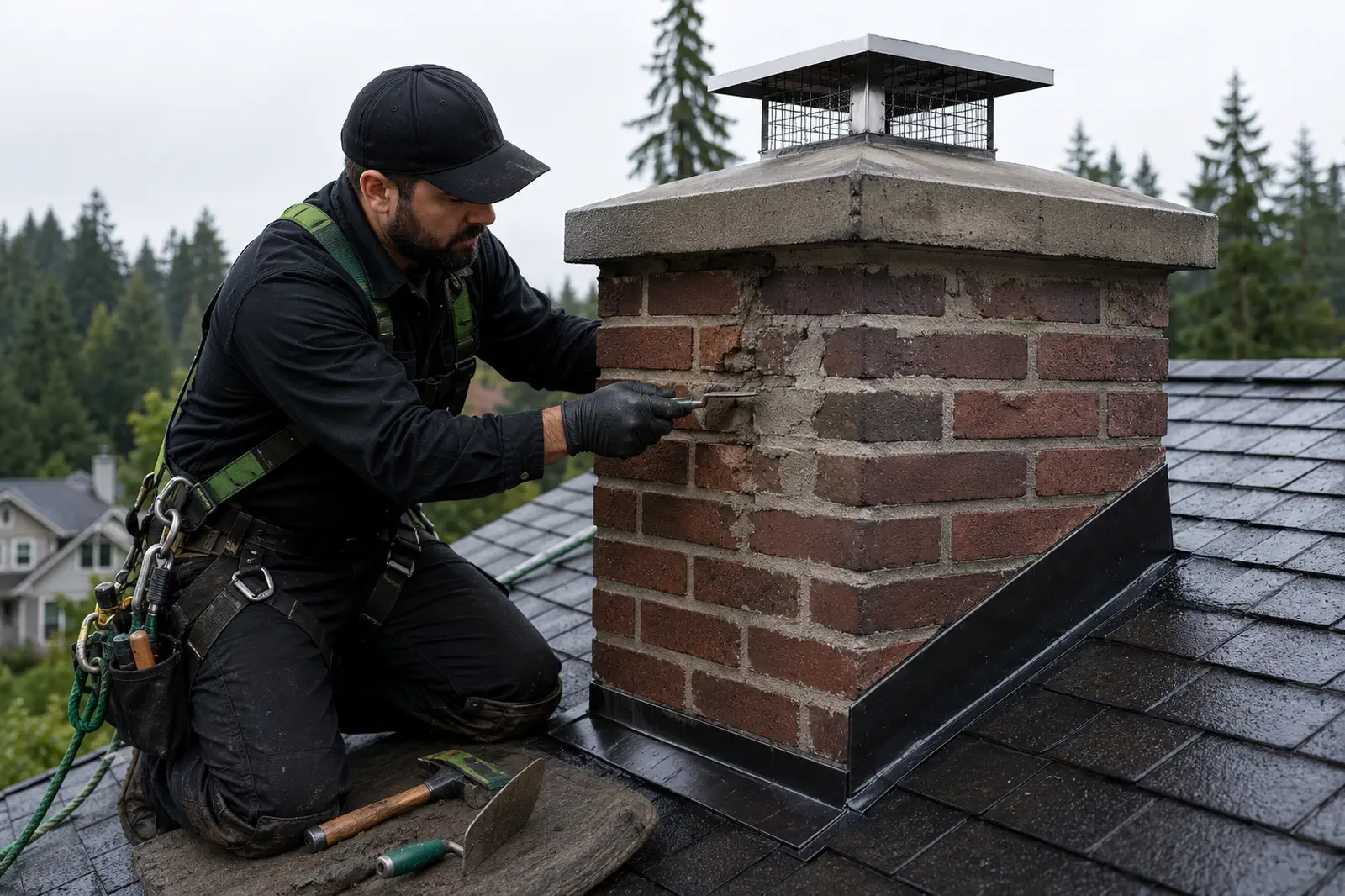
Water sits on the top slab, freezes, expands, and opens the concrete. Every storm after that goes inside the masonry.
The mortar washes out
Joints go soft and recede. Brick faces pop off — spalling — and the structure starts losing material.
The flashing leaks
The roof-to-chimney joint separates and the stain appears on your ceiling, usually blamed on the roof.
The liner breaks
Clay tile cracks. Now heat and combustion gases can reach the framing inside the wall.
The rebuild
Once enough of the above has run its course, patching stops being honest and the chimney comes down to a sound course and goes back up.
Pick the one that sounds like yours
A safer chimney starts with an honest look at it.
Booking takes a minute. Peak season here runs September through November.