
Something is living in there
Birds, squirrels and windblown branches pile up just above the damper. A blocked flue does not vent — it pushes smoke and carbon monoxide back into the room.
Removal and a cap: $200 – $850
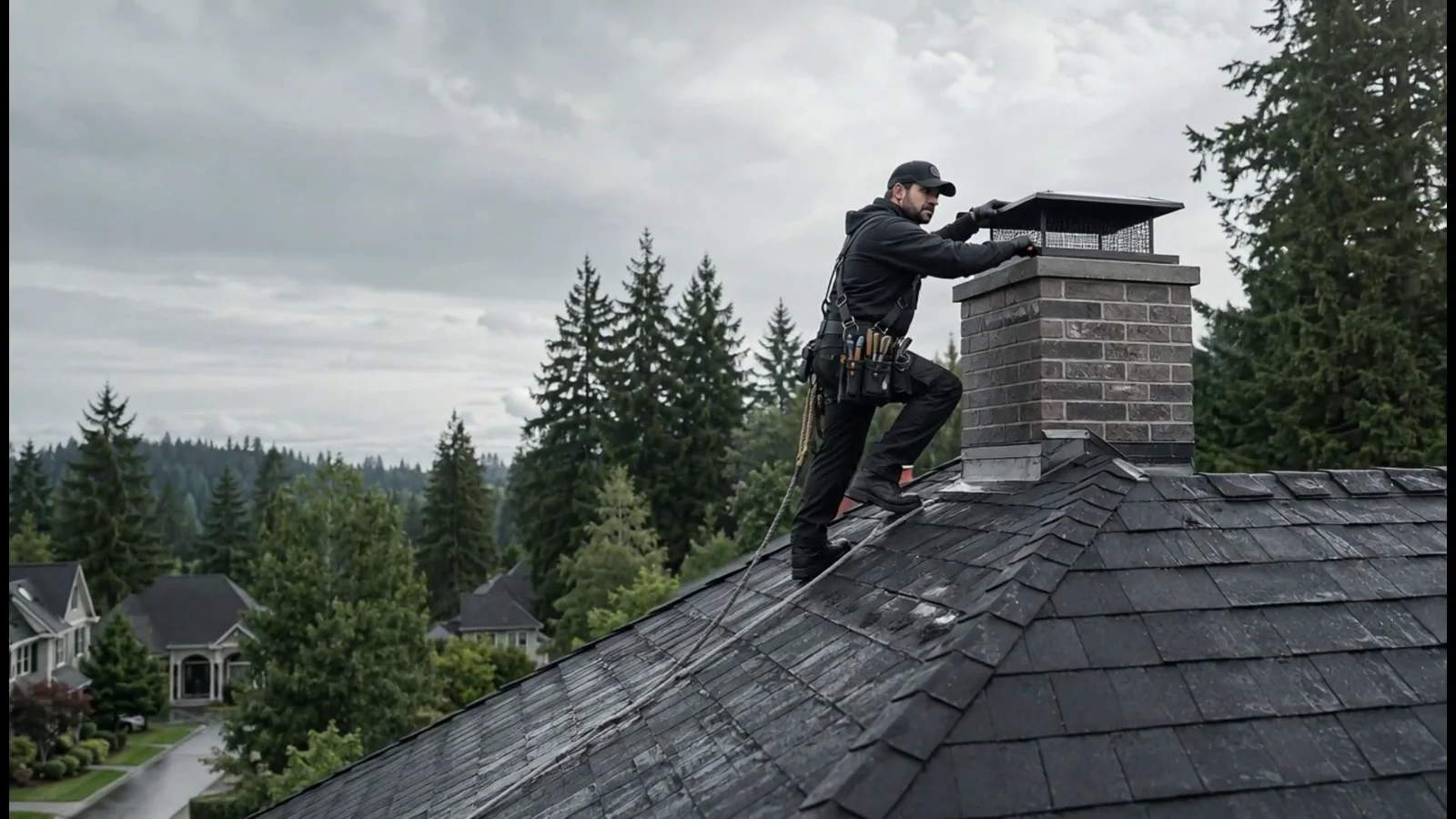
Your local chimney experts — safety, quality and reliable service.
Sweeping, inspection, repair, restoration and rebuilding for Seattle and the surrounding communities. You get the findings in writing before anyone quotes a repair.
Built for Washington homes
Evergreen Chimney Experts provides professional chimney sweeping, inspection, repair, restoration and rebuilding throughout Seattle and the surrounding communities.
Our team works with every kind of chimney and fireplace system, from traditional masonry stacks to modern prefabricated units. Whether yours needs routine maintenance, a repair, a new liner, leak protection or a major restoration, the job is to find the right solution for your home — not the biggest one.
This is a drawing, not a photograph — a cutaway of a typical Washington masonry flue. Scroll to go down it. Everything labeled here is something we find in Puget Sound homes every week.
Birds, squirrels and windblown branches pile up just above the damper. A blocked flue does not vent — it pushes smoke and carbon monoxide back into the room.
Removal and a cap: $200 – $850
Dry and crumbly, the residue of a normal burning season. This is exactly what an annual sweep exists for, and it is the least expensive problem in this whole flue.
Sweep and inspection: $200 – $400
Hardened into a tar-like shell that a brush slides straight over. It burns hot and fast if it ever lights. Removing it takes a different process, and a much more careful quote.
Priced after inspection — never over the phone
Freeze-thaw cycles and past chimney fires both crack clay tile. A broken liner lets heat and combustion gases reach the framing behind the wall.
Relining: $4,600 – $8,000
Three conditions we run into every week. None of these is unusual, and every one of them was invisible from the living room.
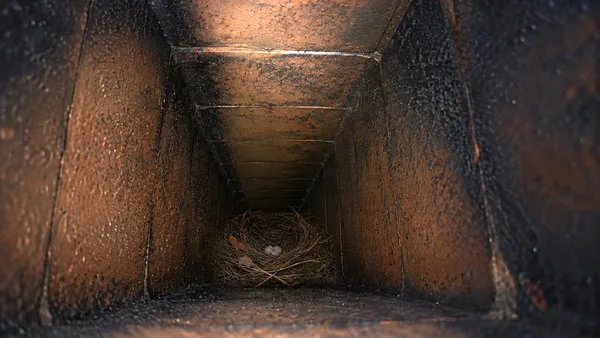
Birds, squirrels and windblown branches pile up above the damper and block the draft, pushing smoke and carbon monoxide back into the room.
Removal and a cap: $200 – $850
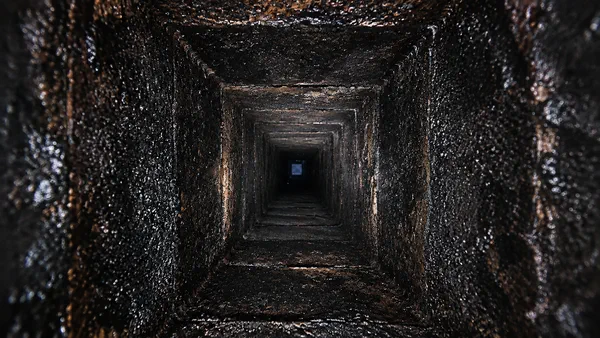
Degree 2 is dry and flaky and brushes off — that is what the annual sweep is for. This is the other one: hardened into a tar shell that a brush slides straight over.
Priced after inspection — never over the phone
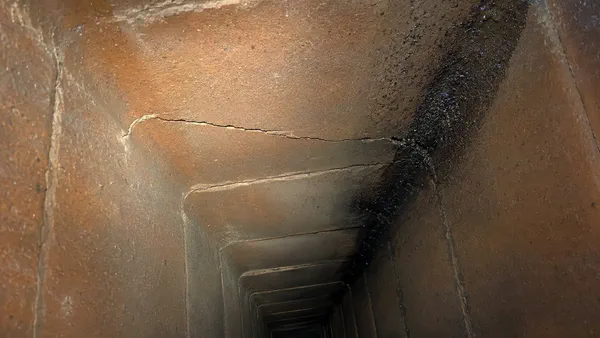
Freeze-thaw cycles and past chimney fires both crack clay tile. A broken liner lets heat and combustion gases reach the framing behind the wall.
Relining: $4,600 – $8,000
Keep your chimney clean, maintained and ready when you need it. Stop deciding every autumn — regular maintenance finds small problems while they are still small. A cap caught this year costs a few hundred dollars; the same cap ignored for three winters is water in the masonry and a four-figure repair.
A maintenance and cleaning package makes it predictable — sweeping, inspection and the seasonal checks on a schedule built around your chimney and how you actually use it.
From routine maintenance through major restoration — one company for the whole system.
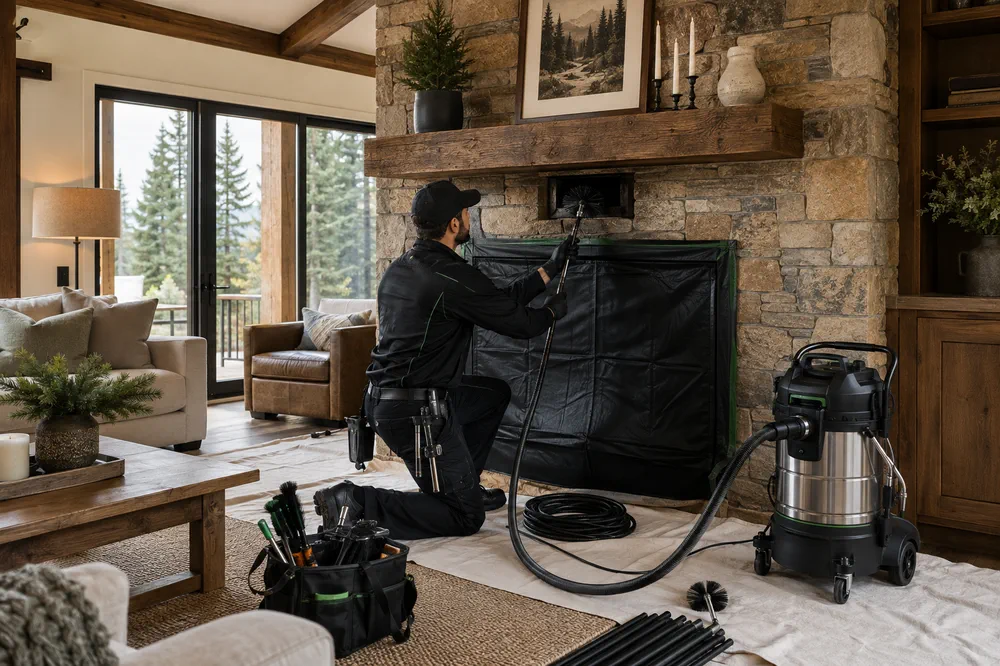
Soot, ash, creosote and debris build up inside a chimney over time. Sweeping removes that buildup and keeps air moving through the flue the way it should. We inspect the accessible parts while we clean, and tell you about anything visible that needs attention.
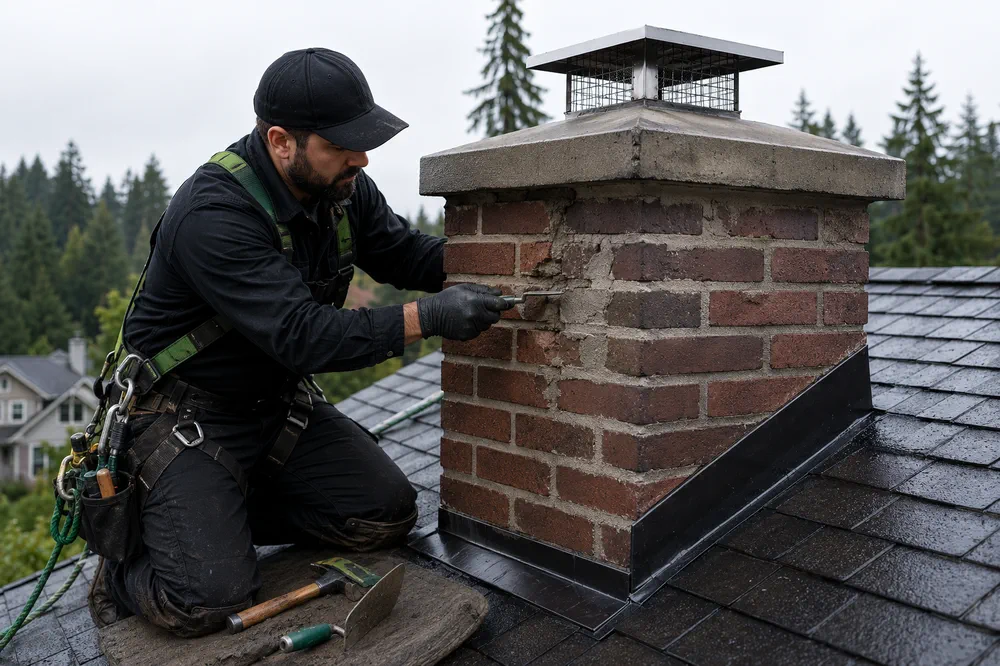
Your chimney takes rain, wind and temperature swings all year, and mortar joints, bricks and crowns deteriorate. Small problems get considerably more expensive when they are left alone — we inspect the damage, explain the options, and recommend based on what the chimney actually needs.
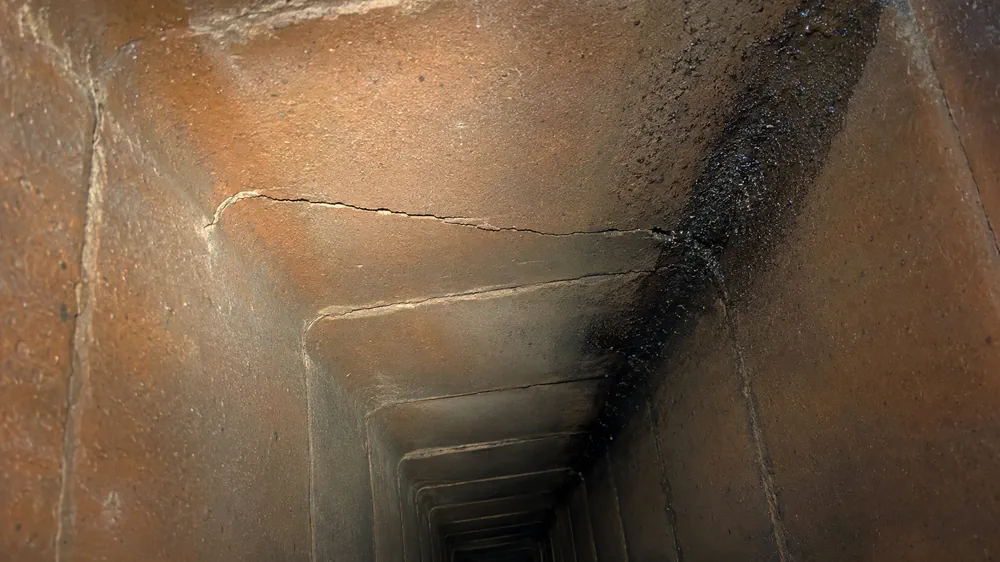
The liner carries smoke and combustion gases out of the house and protects the structure around the flue from both. When it cracks, or is no longer right for the appliance connected to it, relining is the fix. We evaluate what is there before recommending anything.
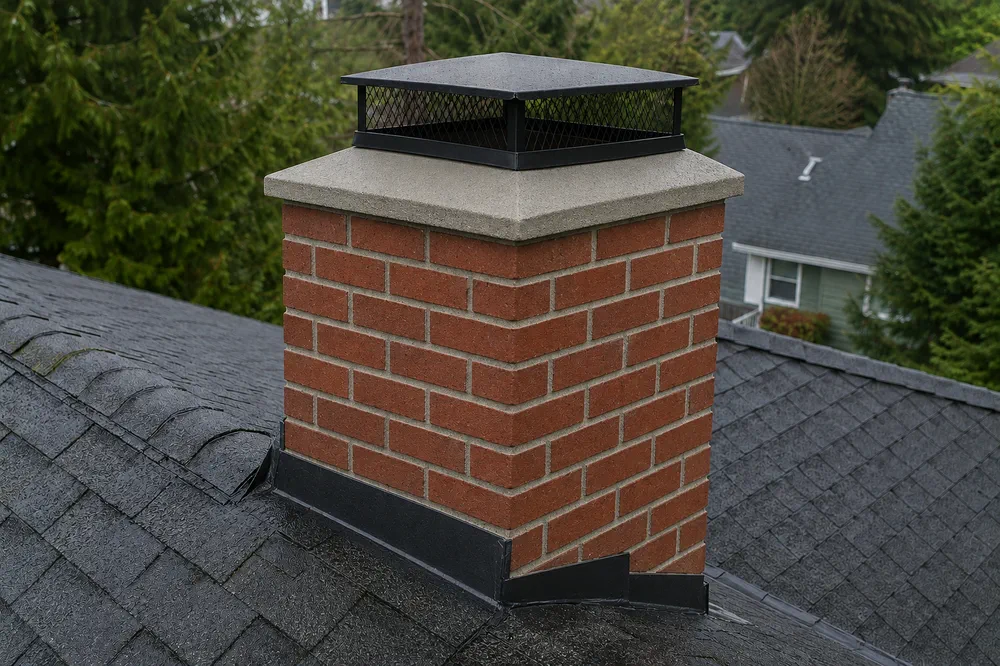
Some chimneys need more than a repair. Years of moisture, settling or previous improper work cause damage that patching will not solve. We preserve as much of the existing chimney as is practical and rebuild what has to be rebuilt — and we explain the scope, the materials and the process before anything starts.
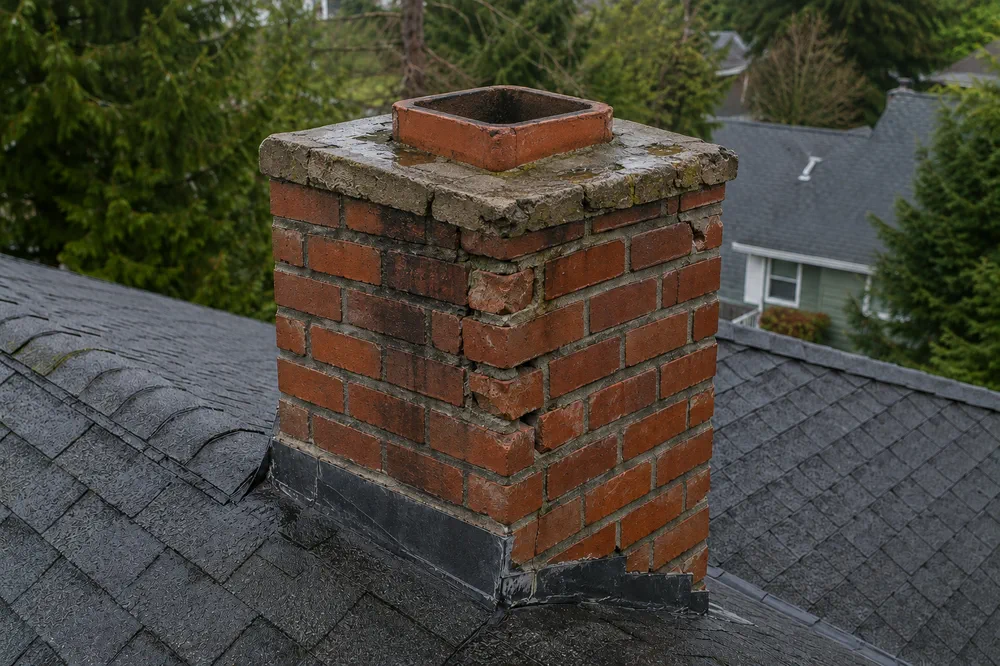
Water is the single biggest enemy of a masonry chimney. A leak can reach the firebox, the attic, the ceiling. We inspect to find where the water is actually getting in, instead of covering the stain it left behind.
Six questions, sixty seconds. If your chimney is fine, this will say so — we would rather keep your number than sell you a service you do not need.
Good chimney work starts with understanding the problem. Most homeowners are not chimney experts, and they should not have to be — that is our job.
We evaluate the chimney and identify what is actually there, before anyone talks about price.
We tell you what we found and what your options are, in language that does not require a trade background.
We recommend the service the condition calls for. Not every chimney problem is a major project, and we will say so.
Once you approve it, the work gets done properly and with attention to detail.
The point of all of it is to protect the chimney, the fireplace and the house for years — not to close a job.
A chimney is not decorative. It carries smoke and combustion gases away from where you live. If we find a concern, we raise it before going any further.
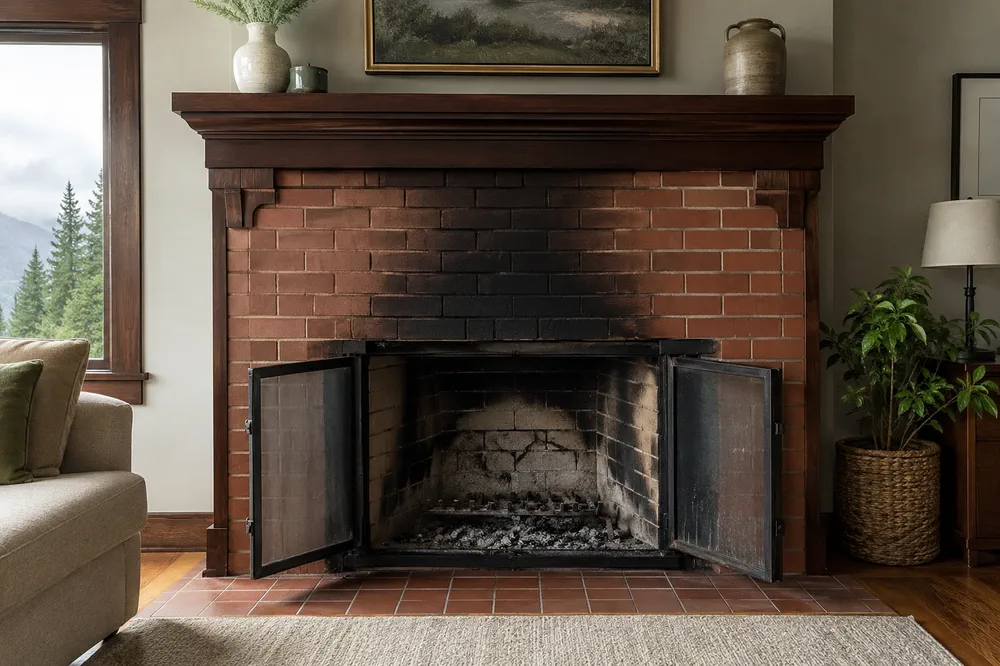
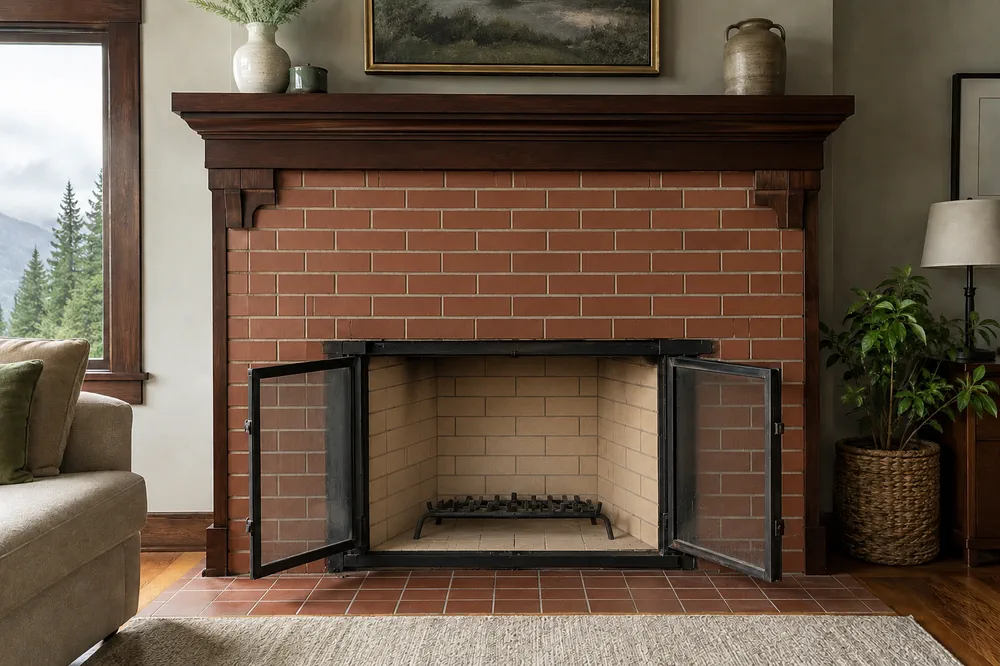
Two real jobs, photographed from the same spot before and after.
The crown had cracked through and the cap was long gone, so every storm was pouring straight down the flue. Rebuilt crown, new stainless cap.
Before
After
Nothing structural here — just a firebox that had done its job all winter. This is what a standard sweep looks like from the living room.
 Before
After
Before
After
Scratching, movement, chirping — a bird or an animal may have gotten in and become trapped. It is not a problem that waits, and it is not one to poke at from the firebox. We keep room for ASAP calls precisely for this.
We inspect the chimney, work out what is causing it, and recommend the next step without doing unnecessary damage to the chimney or the fireplace. Once it is resolved we check the cap and the other entry points, so it does not happen again.
Every property is different, and not every chimney needs the same solution. We work out the actual condition before recommending anything.
Homeowners should understand what their chimney needs, why it needs it, and what the options are — before any work begins.
A professional company, not a truck and a brush.
Sweeping, masonry, liners, leaks, rebuilding and restoration. You are not handed off halfway through.
You hear what we found and what it means before anyone quotes a number.
We keep room for the problems that will not wait until next week.
This climate is hard on masonry. Repeated moisture is what takes mortar, brick, crowns and flashing apart here, and that is what we plan around.
Serving Seattle and the surrounding communities, with the travel policy stated up front.
From routine sweeping to masonry restoration and rebuilding. Each of these has its own way of wearing a chimney out — pick yours and see what we run into there.
Evergreen Chimney Experts was created with a simple goal: give Washington homeowners professional, dependable chimney service and straightforward answers.
When we inspect a chimney we take the time to explain what we found, what may need attention, and which service actually fits the condition. We do not believe every chimney problem is a major project — the job is to identify the problem and recommend a practical solution.
Sweeping · Repairs · Relining · Rebuilding · Restoration · Leak repair
Contact Evergreen Chimney Experts to schedule your chimney service. Peak season here runs September through November, and the good slots go first.