
Chimney leaks and flashing
If there is a stain on your ceiling near the chimney, the roof usually gets blamed. Five times out of six, the water came in through the chimney.
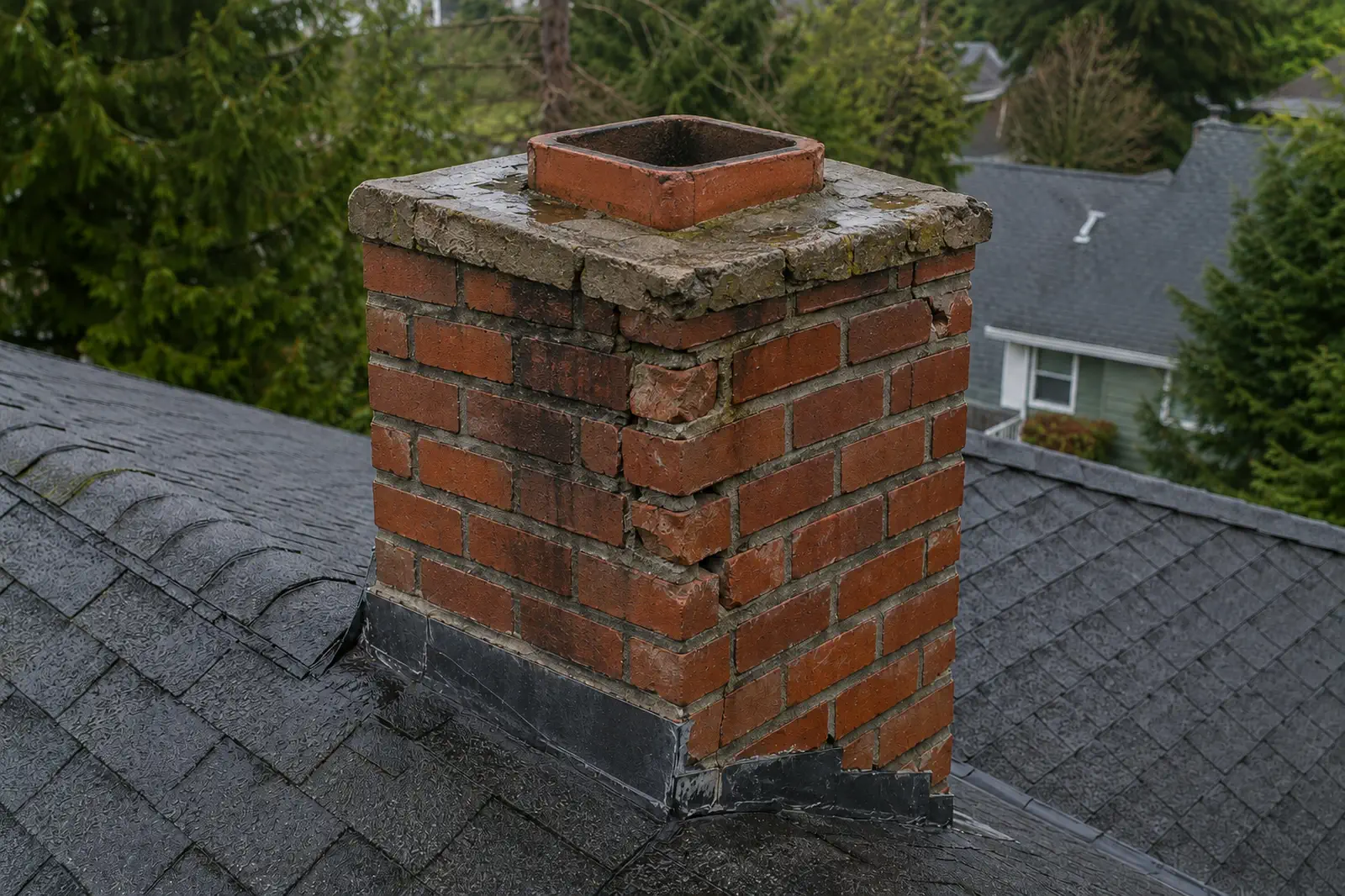
The five ways water gets in
Straight down the flue
No cap, or a failed one. The simplest problem on this list and the cheapest to solve.
Through the crown
Cracks in the top slab let water into the masonry, where it freezes and widens the crack.
Through the brick itself
Brick is porous. In a climate this wet, unsealed masonry takes on water like a sponge.
Through the mortar joints
Once the joints recede, every horizontal surface on the chimney becomes an inlet.
Through the flashing
The metal joint where chimney meets roof. It separates, it lifts, and someone at some point sealed it with roofing tar instead of replacing it.
Finding which one
That is the whole job. Five causes look identical from your living room ceiling and cost wildly different amounts to fix.
Waterproofing, and when it is a waste of money
A vapour-permeable masonry sealer keeps water out while letting the wall breathe, and on sound brick in this climate it is genuinely worth doing. On brick that is already spalling, or over cracked mortar, it seals moisture into the wall and accelerates the damage. Sealing comes after the repair, never instead of it.
Water damage compounds. Quickly.
A leak found in September is a cap. The same leak found in March is masonry.